
[PRACTICE NOTE] The Value Lost Between Script and Patient

Wayne Simmons • September 21, 2026

Share this article

Institutions tend to measure the moment they can see most clearly rather than the moment that matters most. In pharmaceutical commercial organizations that moment is the prescription, which is visible, countable and reportable within weeks. Everything that follows it is harder to see and considerably harder to own. The result is an industry that knows a great deal about how demand forms and comparatively little about whether it survives.

That distinction carries a cost, and in work I published with TheyDo we put arithmetic to it. A clinical decision that goes a brand's way already represents value the science and the promotion have earned. What happens after that decision determines how much of the value the organization ever sees.

The ladder from earned value to realized value

Begin with a billion dollars of earned value, meaning prescribing decisions that have already gone a brand's way. Roughly thirty percent of prescriptions are never filled, which takes that billion to around seven hundred million before a single patient has started therapy. Early discontinuation claims a further tranche. Long term adherence erosion takes more again, and what remains is close to four hundred and fifty million in realized value.

The striking feature of that ladder is who collects the difference. No competitor takes it. It is not lost to a rival, it is lost to the system between a decision and a dose. That makes the loss unusual, because almost every other number on a commercial review has a named beneficiary somewhere.

Dashboards measure the formation of intent rather than its survival

Commercial performance in this industry has long been measured at the point of prescribing. The convention is rational, since that is the moment the field organization influences and the moment the data arrives reliably. It also carries a hidden cost, because it locates success precisely where the value the organization has earned becomes most exposed. Every instrument on the commercial dashboard points upward at the moment leakage is worst.

A system built this way reports the formation of intent and says very little about its survival. That may be why so many organizations read their own data faithfully and still reach the wrong conclusion about how well they are doing. The numbers are accurate. The inference drawn from them is often wrong, which is a design problem in the measurement of customer experience rather than a failure of analytical rigor.

The Path to Fulfill runs through parties with different incentives

The first stretch of loss sits on the Path to Fulfill, which runs from a clinical decision to the medicine in a hand. It passes through benefit verification, prior authorization, affordability, specialty pharmacy coordination, onboarding and first fill. Each of those steps is administered by a different party with different incentives and a different definition of a good outcome. Each is a point where a clinically justified decision can stall or quietly end.

The external evidence on that stretch has become difficult to set aside. A 2026 JAMA study summarised by Johns Hopkins found insurer rejections reached 40.7 percent of initial brand name attempts in 2024. Of those rejected prescriptions, 48.4 percent were never followed by a fill of that drug or anything in its class within ninety days. Affordability compounds the pattern, since IQVIA found that 61% of prescriptions go unclaimed once the final cost passes $250.

None of this reflects a shortage of effort or care inside commercial organizations. The AMA physician survey reported that 82% of physicians say prior authorization at least sometimes leads patients to abandon treatment, which tells you how much of this sits outside any one company's walls. What capable people do in response is absorb the gap personally, calling the hub after hours and working escalations nobody records. Heroics operate as a subsidy for a design that was never built to carry the load.

The Path to Adhere extends to the duration the trial demonstrated

The second stretch is the Path to Adhere, which runs from first fill to the duration the trial actually demonstrated. This is where the distance between a label and a life becomes widest. A regimen that performed for a defined period under controlled conditions now has to survive side effects, refill logistics, benefit resets, changes in income and the ordinary fatigue of managing a condition. Most commercial systems carry no mechanism for noticing when that survival begins to fail.

The erosion is slow, which is part of why it goes unmanaged. A brand can post strong prescribing performance for several quarters while its realized value declines underneath, because the two measures are tracked by different functions on different cycles. By the time persistence data confirms the pattern, the cohort it describes has largely dispersed.

Some attrition reflects judgment that deserves respect

Some share of this attrition is appropriate and should be read that way. A clinician changes approach on clinical grounds. An informed patient weighs burden against benefit and decides against continuing. Those decisions deserve respect, and treating them as commercial losses would be both wrong and corrosive to the trust the relationship depends on.

The work is to separate them from the cases where someone could not move forward because information was unclear or responsibility was unresolved. Those two categories can look identical in claims data while being entirely different problems. One is medicine working as intended. The other is an operating model failing quietly, and organizations that never separate the two tend to overestimate how much of their attrition was actually chosen.

An unnamed loss acquires no owner and no budget line

There is a structural reason this persists in companies that are otherwise exacting about cost. An unnamed loss has no owner, no budget line and no place on a scorecard. Nobody is failing to manage it, because nothing in the management system has ever asked anyone to manage it. Naming the loss is the precondition for governing it, which is why vocabulary turns out to matter more here than it usually does.

In the organizations I have worked inside, the moment a loss acquires a name is the moment it acquires a meeting. That meeting is where ownership gets assigned and where the first honest estimate of size appears. Before the name exists, the same conversation circles between access, marketing and patient services without landing anywhere. Each function can show it met its own standard while the patient still fails to progress.

Three measures that make leakage legible in a finance conversation

Three measures carry the argument into the rooms where resources are allocated. The Realization Yield is the share of earned value that becomes sustained therapy. Value leakage is the distance between earned and realized. Earned value multiplied by one minus the Realization Yield gives value at risk, a number that tends to require no translation in a finance conversation.

What makes these useful is less their precision than their location. They sit downstream of the prescription, which is exactly where the existing instrumentation goes dark. An organization that can state its Realization Yield by brand and by segment holds a different conversation about commercial investment than one that can only report scripts. It also has a defensible basis for discussing the return on customer experience investment, which has rarely been available in this industry.

The marginal dollar now earns more protecting intent than creating it

If less than half of created intent survives to realization, the economics of commercial investment change. The marginal dollar spent creating more intent competes directly against the marginal dollar spent protecting intent that already exists. In most portfolios the second dollar now earns more, because it operates on value the organization has already paid to create. That is an argument about return, which is why it belongs in the planning cycle rather than in a customer experience charter.

This is the work I describe as Customer Excellence, the fourth domain of commercial excellence alongside launch, marketing and sales. It is the one the industry never built, largely because a pharmaceutical company does not control the transaction between its science and a patient. The absence shows up as the distance in the ladder. Closing that distance asks for owned and measured accountability for progression after the prescription, not for another program.

Key Takeaways

  • A clinical decision that goes a brand's way is earned value, and roughly half of it can be lost between that decision and sustained therapy.
  • Measuring commercial success at the point of prescribing locates the scorecard exactly where leakage is worst.
  • The Path to Fulfill and the Path to Adhere are both administered by parties with different incentives, which is why loss accumulates between steps rather than inside them.
  • Some attrition reflects sound clinical judgment or informed patient choice, and separating those cases from unresolved friction is the actual analytical task.
  • The Realization Yield, value leakage and value at risk give the loss a name, a size and a place on a scorecard.
  • Where less than half of created intent survives, the dollar spent protecting existing intent often returns more than the dollar spent creating more of it.

Diagnostic Questions to Consider

  1. State the share of prescribing decisions in your largest brand that become sustained therapy at the duration the trial demonstrated.
  2. Name the executive accountable for a patient's progression from prescribing decision to first dose, and the authority that person holds across functions and partners.
  3. Separate last year's attrition into clinical judgment, informed patient choice, payer decision and unresolved friction, and defend the proportions.
  4. Estimate value at risk for one brand by multiplying its earned value by one minus its Realization Yield.
  5. Compare the budget allocated to creating additional prescribing intent with the budget allocated to protecting the intent already earned.

Closing Reflection

The industry has spent decades becoming precise about the formation of demand. Targeting, segmentation, messaging and field deployment are measured with a rigor that would be recognized in any consumer category. The same organizations often cannot say what proportion of the demand they created ever reached a sustained dose, which is a strange asymmetry for businesses whose products are judged on outcomes.

What makes this worth confronting is not that anyone has behaved badly. Capable people are working inside a structure that was built to earn decisions rather than to protect them, and the structure performs exactly as designed. The loss sits in the connections between steps, where no single function has ever been asked to look. That is a design question, and design questions can be answered.

The prescription marks the end of persuasion and the beginning of realization. Treating it as the finish line was a reasonable convention when the route from a decision to a dose was shorter and simpler than it is today. It has become the most expensive measurement habit in the commercial model, and the organizations that retire it first will find value that no competitor ever took from them.

About the Author

Wayne Simmons is the founder of The Customer Excellence AGENCY and the author of The Customer Excellence Enterprise (Wiley, 2024). He is founding faculty of the MS in Customer Experience Management at Michigan State University's Broad College of Business. He led global customer excellence in Pfizer's first Chief Marketing Organization and in Bayer's Customer Powerhouse.

The Customer Excellence Agency: Advancing the Pursuit of Excellence in Service of Science.

Recent Posts

Diagram of looping routed lines with one path traced in orange
By Wayne Simmons • October 14, 2026
Pharma's investment in a patient is largely complete before the first dose. Realization Yield is the yield on that investment, and yield is a leadership choice rather than a market condition.
One ringed router sending routes to five doors, with one route lit in orange
By Wayne Simmons • October 13, 2026
Patient support consulting that rebuilds the operating model and attaches a measure to it. Eight manufacturer audit, Realization Yield, and a routing design for the patient.

Pale wheat-like fibres beside scattered dark particles
By Wayne Simmons • October 10, 2026
Eight manufacturers publish up to nine affordability routes each. None publishes a tool telling a patient which one is hers. The router is a phone number.

Dotted blue mesh forming a curved wave in dark space
By Wayne Simmons • October 10, 2026
Three kinds of firm answer to the words pharma CX and none governs whether earned value survives. The questions to ask, and what Consumer-Grade demands.

Ringed nodes linked by arrows into one connected system around a central core
By Wayne Simmons • October 10, 2026
Twenty defined terms from one pharma commercial practice, from Consumer-Grade to Realization Yield, including two that disagree with general business usage.
October 10, 2026
Synthetic personas generate the hypothesis, direct voice tests recognition, the frontline confirms occurrence. Run in that order the three compound. Run alone each produces no decision.
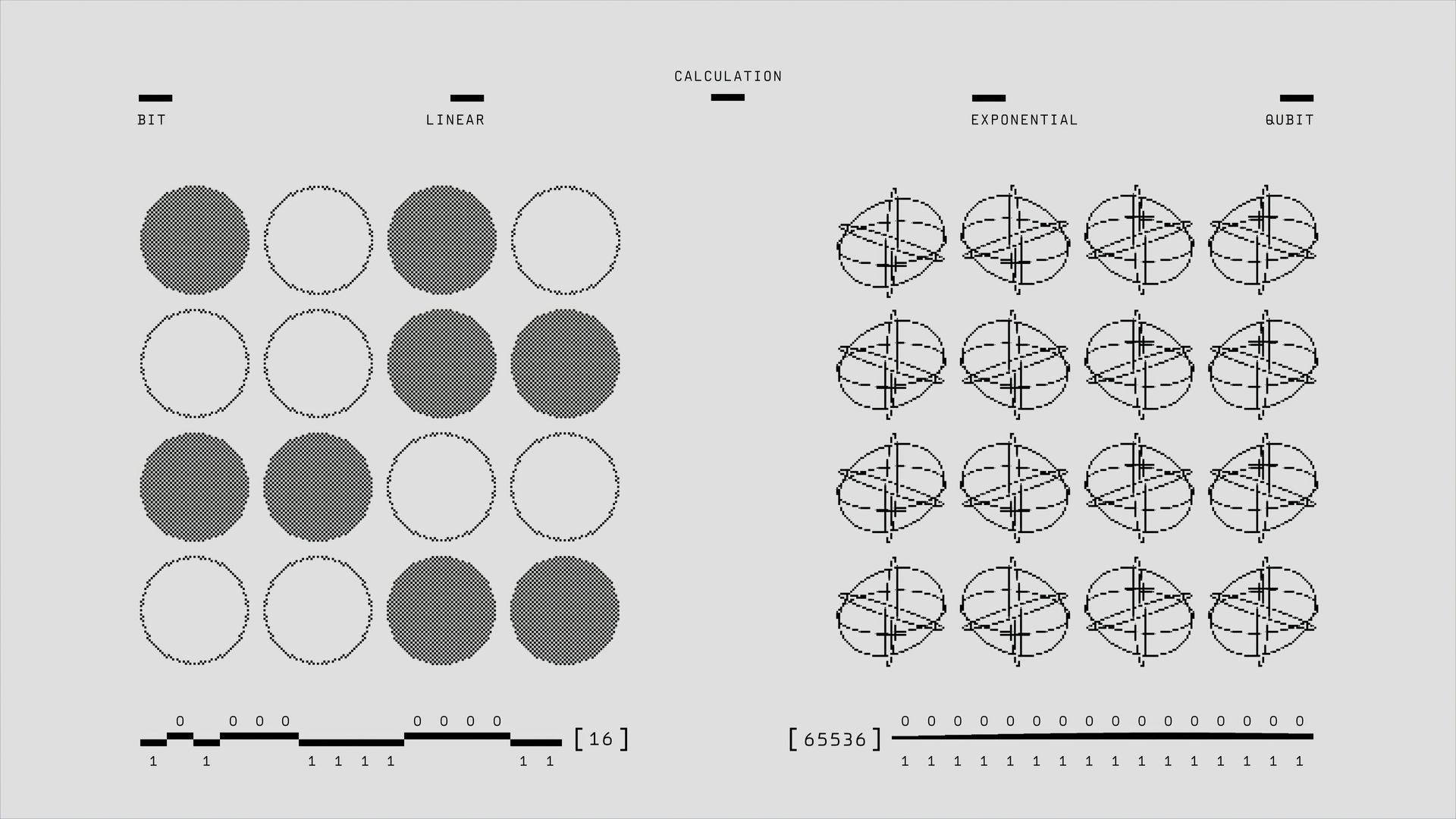
Technical diagram of filled circles beside wireframe spheres
By Wayne Simmons • October 10, 2026
The chain starts with the science and ends with patient therapy. The clinical decision is the pivot point, and it depends on the commercial model rather than sitting after it.

Network of black nodes joined by connecting lines on white
October 10, 2026
Channel coordination makes outbound activity consistent. Journey coordination makes a customer's progress continuous. Only the second is Consumer-Grade.
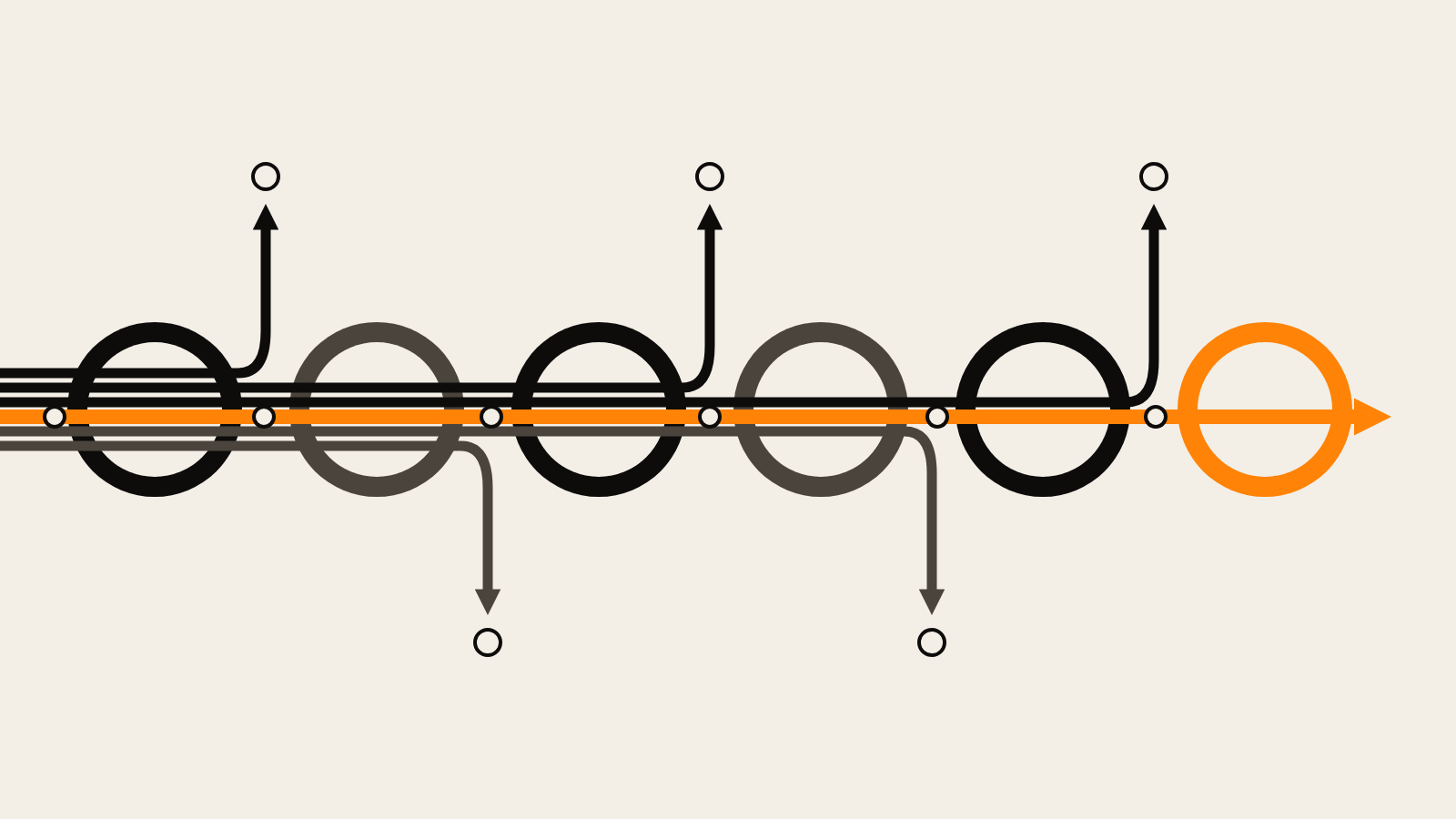
Six routes entering a row of gates, one lost at each gate, with a single orange route passing through all six
By Wayne Simmons • October 10, 2026
Access is used loosely to mean coverage, and coverage is one of six barrier classes. A usable taxonomy, and why where a barrier stalls matters more than what type it is.

Vivid green and pink coral and algae in close-up
By Wayne Simmons • October 10, 2026
Launch excellence is pharma's most mature commercial discipline. It misses nothing through carelessness. Its window closes before the realization it earned has finished happening.

Show More