[PRACTICE NOTE] Reimagining Marketing and Sales for Experiential Commerce

CASE-IN-POINT: Reimagining Marketing and Sales for Experiential Commerce


BOLD MOVE: The Customers for Life Imperative. The Shift: Experiential Commerce


Synopsis. In the era of Experiential Commerce, aside from the ubiquitous “funnel”, one thing that unifies marketing and sales organizations is that neither has visibility or accountability for the quality of the end-to-end purchasing journey or customer lifecycle. Often resulting in fragmentation and inconsistency, these disconnects can create excessive effort and frustration for customers as they contemplate purchasing, loyalty and other lifecycle decisions. The stakes are high—the cumulative impact of negative commercial interactions on the overall customer relationship can be uncertain, and the long-term effects on brand perception can be difficult to measure, exposing companies to potentially costly setbacks to revenue performance.


Key Question.

Setting aside the entire customer lifecycle for a moment, are marketing and sales themselves causing customer pain and frustration even before the purchase is complete?


What’s the Situation?

Marketing and sales organizations have typically operated in functional silos, with each focusing on different stages of the purchasing journey. In this common corporate construct, each function may have different views on customer needs, leading to its own tactical priorities, ways of working, and KPIs to hit. Overlaps, friction, and high-risk hand-offs become predictable outcomes of this functional division, potentially causing effort and frustration for customers very early in the customer lifecycle. 


Adding another layer of complexity, marketing and sales interactions are often seen as separate from the broader customer experience. With their collective focus on transactional campaigns and sales calls, these interactions are typically not well orchestrated into holistic, integrated commercial journeys. Whether an in-person pitch, a phone call, an email blast, or a digital ad, these interactions can come across as highly variable, influenced by the techniques and stratagems of individual brand managers and sales reps, which can leave customers feeling disoriented as they are forced to navigate through disjointed paths to purchase.


Why Does This Matter?

With the advent of Experiential Commerce, the transition of value exchange from tangible goods to intangible interactions, where the customer relationship is driven increasingly by the quality of experiences rather than solely by products and brand factors. In this model, customers increasingly prioritize exceptional, personalized experiences alongside traditional considerations like product quality, price, and brand reputation when making purchasing and loyalty decisions. It reflects a fundamental shift in consumer preferences and behavior, where emotional connections and memorable interactions are key determinants of value.


Additionally, customer expectations are now set by customer experience "outliers" from outside of traditional industry boundaries and shaped by word-of-mouth feedback from peers on social media and review platforms, a fragmented approach is no longer acceptable. This new paradigm acknowledges that the purchasing journey is no longer linear and that customers interact with companies across a wide range of touchpoints—both digital and physical. Every interaction, including commercial interactions, can leave customers with brand impressions ranging from delightful to confusing to undesirable, with each having corresponding effects as triggers or barriers to purchasing behaviors. 


Marketing and sales must also no longer exist through isolated campaigns and sales call transactions but by creating orchestrated, high-value experiences that lead to long-term win-win relationships. Also, gone are the days when these interactions were seen as separate from the broader customer experience. This is consistent with customer preferences as, according to Salesforce, 84% of customers say that the experience a company provides is as important as its products and services, and 70% of buying experiences are based on how the customer feels they are being treated.  


Key Issue. Unfortunately, despite these truths, many companies continue to view marketing and sales interactions as immune from the idea of delivering high-quality customer experiences.


What CXEs Do: Turn "Ideal Experiences" into Unique Selling Propositions

Rather than being viewed as a threat, Experiential Commerce offers CMOs, modern marketers, sales leaders and other commercial practitioners the opportunity to realign their marketing and selling capabilities to the way customers are evaluating options and making purchasing decisions. Following the practices of Customer Excellence Enterprises (CXEs), rather than through product factors and brand factors alone, companies can create and offer differentiated value to customers by combining product, brand, and experiential factors into unique selling propositions that are truly unique. This type of change cannot be done superficially, it must be done structurally, starting with the rewiring ways of working to consistently deliver high-quality commercial experiences that resonate with customers at scale. 


To ensure that marketing and sales interactions are consistently high-quality while still allowing for flexibility, companies need to focus on training their teams based on key principles that define their brand-aligned Ideal Experience. The Ideal Experience concept serves as a documented vision and set of guiding principles that can be applied to every customer interaction, ensuring that marketers, sales representatives and other customer-facing functions maintain the brand’s core values while tailoring their approach to individual customer needs.


Focusing on the key interaction attributes of the Ideal Experience—such as empathy, simplicity, personalization, and transparency—companies can empower their teams to create genuine, meaningful connections with customers with distinctive points of differentiation at the point of engagement and sale. These principles should be integrated into every interaction and touchpoint in the customer journey, from initial marketing campaigns to post-sale follow-ups, ensuring that customers feel heard, understood, and valued at every stage. This requires not only crafting Ideal Experiences but also targeted training and up-skilling to embed this ideal into the ways of working for marketers and sales representatives.


Key Issue. Sales and marketing training often leans heavily on developing functional skills, such as crafting product messaging, articulating brand benefits, and mastering sales techniques. While these are essential, this focus can lead to a transactional approach that prioritizes promoting features and benefits over delivering meaningful customer experiences. 


What CXEs Do: Apply Blended Training for Brand-Aligned Interactions

Customer Excellence Enterprises recognize that true competitive advantage lies in creating emotionally resonant, brand-aligned experiences across the customer lifecycle, inclusive of the purchasing journey. These very different types of companies supplement functional marketing and sales training with an intentional focus on cultivating skills and behaviors that deliver interactions that embody the brand’s identity and values. This dual-focus training ensures that every touchpoint reinforces the brand’s identity and commercial outcomes. Through intention and design, the act of training marketers and sales reps not only on what to do, but on how to do it, and why it matters, CXEs build a culture with supporting systems and structures that reinforce excellence across every interaction.


Disney serves as a prime example of this holistic approach. While Cast Members (Disney employees) receive comprehensive functional training to perform their specific roles—such as operating attractions, managing queues, or serving food—they are also meticulously trained to uphold Disney’s standards for guest interactions. Disney defines these standards through attributes such as friendliness, attention to detail, and a commitment to creating magical moments. For instance, Cast Members are taught to make eye contact, smile warmly, and proactively assist guests to ensure that every interaction reflects Disney’s promise of exceptional customer service.


Key Issue. In the pursuit of consistently delivering high-quality experiences and Ideal Experiences at scale, rigid rules and overly structured approaches to sales and marketing interactions can stifle creativity and spontaneity—the qualities that often differentiate exceptional sales representatives and marketers from average ones.


What CXEs Do: Balance Structured Selling Systems with Individual Empowerment

The highest performing marketing, sales and commercial teams rely heavily on processes and systems to maintain high standards and consistency in their efforts. Well-defined systems help ensure that messaging, branding, and customer interactions are aligned across teams and channels, reducing variability and delivering a predictable, high-quality experience. While a consistent, brand-aligned standard of interaction can pay commercial dividends, CXEs recognize the effectiveness of commercial interactions often hinge on the ability of individual reps to respond to customer needs in real-time, in a way that feels authentic and personalized to the unique context of each customer. Overly strict guidelines or inflexible scripts can remove that sense of spontaneity and thinking on your feet capacity that good sales reps and marketers seem to have.


At the core of this practice, CXEs excel at striking the right balance between structured systems and empowering their marketing and sales teams to deliver personalized, brand-aligned experiences. These organizations implement systems and processes as frameworks rather than rigid rules. Particularly relevant in the digital arena, it is fairly routine for marketers to follow standardized workflows for campaign planning and execution, and sales reps may rely on playbooks that outline best practices for each stage of the purchasing journey. However, these frameworks are designed with flexibility, allowing teams to tailor their approaches to individual customer needs. With the capacity to strike the balance, CXEs ensure that every touchpoint reflects the brand’s promise while being relevant to the customer’s specific situation. Rather than being disruptive and full of effort and frustration for customers, this approach fosters trust, loyalty, and differentiation, creating a purchasing journey that is not only consistent but also commercially impactful.


Key Takeaways

  • In Experiential Commerce, where every touchpoint matters, companies must facilitate high-quality purchasing journeys that align with customer expectations and deliver commercial results
  • This shift requires a fundamental change in how companies approach marketing, sales and commercial interactions.
  • While consistency is crucial, companies must avoid constraining marketers and sales reps with overly rigid rules that limit their ability to connect with customers in an authentic and personalized manner
  • Training marketers and sales reps on the principles of the Ideal Experience—and empowering them to apply those principles in context—can create more engaging, effective interactions that drive sales and marketing performance


Questions to Consider

  1. Are our sales, marketing, and commercial systems designed to deliver seamless and personalized experiences across all interactions and the entire customer lifecycle?
  2. Do we measure success using customer-centric performance indicators (CPIs) that reflect customer success and goal attainment, rather than relying solely on traditional campaign or transaction-focused KPIs?
  3. How effectively do our teams collaborate to align the entire purchasing journey with customer expectations while driving commercial results?

To learn more you can get started by downloading a 29-page preview, connecting with us as partners on the journey, and ordering “The Customer Excellence Enterprise: A Playbook for Creating Customers for Life” at all major booksellers.

By Wayne Simmons March 15, 2026
Why Customer Excellence is emerging as the discipline that turns scientific innovation into real-world impact. Pharmaceutical science has never been stronger. Pipelines are more diverse, clinical development more precise, and manufacturing more advanced than at any point in history. Yet amid this extraordinary progress the industry faces a defining paradox. Scientific excellence has accelerated dramatically, while the experiences through which that science reaches physicians and patients have not kept pace. The next chapter of commercial excellence will not be won by companies that merely communicate their science more efficiently. It will belong to organizations that deliver it more meaningfully. The companies that lead the next era of healthcare will treat customer experience with the same rigor as clinical efficacy, ensuring that every engagement becomes living proof of their science, their purpose, and their credibility. For decades the pharmaceutical industry has set the evidentiary standard for science and the trust standard for its brands. What now emerges as the next frontier is an experiential standard capable of matching both. Only when the experience of engaging with a company reflects the same precision, credibility, and consistency that govern its science will the full value of innovation reach the people it is intended to serve. This evolution begins with Customer Excellence , the discipline that unites marketing, sales, and launch excellence into a coherent commercial operating system capable of earning both permission and preference. From Science as Foundation to Experience as Fulfillment Science remains the foundation and heartbeat of the pharmaceutical enterprise. It drives the Path-to-Prescribe, where evidence, education, and clinical outcomes shape physician confidence and influence treatment decisions. Yet even the most extraordinary science cannot fulfill its promise unless it moves successfully through the broader system that surrounds the prescribing moment. Once a therapy is recommended, the journey continues through the Path-to-Fulfill , where access, affordability, operational coordination, and patient readiness determine whether a prescription ultimately becomes therapy in the patient’s hands. Across this journey, friction, administrative burden, and fragmented processes frequently erode impact and delay treatment initiation. Sustained outcomes then depend on the Path-to-Adhere , where patient support, education, monitoring, and continuity of care determine whether individuals remain on therapy long enough to realize its intended clinical benefit. The therapeutic value created in the laboratory is only fully realized when patients are able to begin treatment and stay on it with confidence. Clinical innovation can demonstrate efficacy, but experience determines whether that efficacy becomes reality. The journey from lab to life depends on what occurs before, during, and long after the moment of prescription. Before prescribing, healthcare professionals form impressions of credibility, clarity, and relevance. At the point of decision, trust and confidence influence uptake. Afterward, access, patient readiness, and ongoing support sustain adherence and belief in the therapy. In some therapeutic areas, as many as half of prescriptions go unfulfilled or therapies discontinued prematurely. This is rarely a failure of science. It is more often a failure of system design, where burden-heavy and friction-heavy journeys make it difficult for healthcare professionals to initiate and sustain therapy for their patients. Pharma has long set the benchmark for scientific evidence and brand trust. What is now required is an experiential standard equal to those same heights, ensuring that engagement with the company feels as credible, coherent, and confidence-inspiring as the science itself. Science drives the Path to Prescribe. Experience shapes the Path to Fulfill. Sustained engagement enables the Path to Adhere. Together, these journeys define the new frontier of Customer Excellence. Why Transformation Is No Longer Enough Transformation has become the default response to nearly every commercial challenge. Digital transformation, omnichannel transformation, and now AI transformation have each promised to close the gap between companies and their customers. Yet despite billions invested across platforms, data systems, and engagement technologies, the experiences delivered to healthcare professionals often remain inconsistent, impersonal, and disconnected. The issue is not intent but orientation. Transformation modernizes tools, yet rarely challenges the mental models that define success. Organizations become more efficient at executing familiar patterns rather than reimagining how value should be delivered.Pharma does not require another transformation initiative. What it requires is a disciplined reinvention that questions the orthodoxy of activity metrics, channel proliferation, and functional isolation while restoring coherence and humanity to how the industry delivers its science to the world. Customer Excellence as a Rebellion Customer Excellence represents that shift. It is a disciplined and systemic redefinition of how value is created, delivered, and sustained. Rather than measuring progress through scale and speed alone, it positions coherence, trust, and ease as the true measures of commercial excellence. This shift is not a rebellion against compliance but against complacency. It challenges leaders to move beyond optimization toward orchestration, building organizations where the quality of engagement reflects the quality of the science itself. The Seven Shifts Defining the Discipline The seven shifts form the architecture of Customer Excellence, uniting marketing, sales, and launch excellence into a single human-centered model for sustainable growth. Shift 1. From Tangible to Intangible Value Exchange Customers increasingly evaluate companies through intangible dimensions such as trust, relevance, and ease. Experiential Commerce has elevated these factors from soft considerations to structural drivers of enterprise value. Shift 2. From Campaign-Centric to Customer-Centric Journeys Marketing can no longer rely on episodic campaigns alone. Value is created across continuous journeys where engagement extends far beyond the initial promotional moment. Shift 3. Experience as a Third Pillar of Value Product and brand may attract attention, but experience determines whether relationships endure. Organizations that integrate experience alongside product and brand create a far more resilient value proposition. Shift 4. From Transactions to Relationships Customer health must be measured over time. Longitudinal relationships built on trust ultimately drive sustainable commercial performance. Shift 5. From Funnel to Flywheel Growth no longer ends at conversion. Customer Excellence transforms disconnected interactions into a compounding cycle of engagement, trust, and expansion. Shift 6. From Neutral Interactions to Brand-Defining Moments Every interaction communicates brand character. Thoughtfully designed experiences become evidence of reliability and partnership. Shift 7. From Vertical Silos to Horizontal Journeys Customers experience companies horizontally across journeys, not vertically through internal functions. Customer Excellence realigns organizations to reflect this reality. From Rebellion to System The seven shifts describe how pharmaceutical organizations can close the gap between scientific mastery and the lived experiences that bring that science to life across the full continuum of care. Customer Excellence does not replace Marketing Excellence, Sales Excellence, or Launch Excellence . It integrates them. Together these disciplines form a unified, customer-aligned commercial operating system capable of translating scientific promise into real-world clinical and commercial impact. Within this system, marketing shapes the scientific narrative that informs the Path to Prescribe. Sales brings that narrative to life through trusted engagement with healthcare professionals. Launch orchestrates the critical moments that accelerate adoption. Customer Excellence ensures that the experience surrounding the therapy enables succes s across the Path to Fulfill and the Path to Adhere, where access, support, and sustained engagement determine whether therapeutic value is ultimately realized. This is the next chapter of commercial excellence in pharma. It moves the industry beyond transformation toward orchestration, beyond scale toward coherence, and beyond message toward meaning. Science drives the Path to Prescribe. Experience shapes the Path to Fulfill. Sustained engagement enables the Path to Adhere. Customer Excellence unites all three. Science earns permission. Experience sustains belief. Customer Excellence earns both. Key Takeaways The future of differentiation in healthcare is experiential. Scientific innovation remains essential, but the experiences surrounding therapies increasingly determine whether that innovation achieves its intended impact. Customer Excellence represents the structural response to this shift. By integrating marketing, sales, launch excellence, and service functions into a coherent operating system, organizations can translate scientific value into lived value. Trust is no longer assumed simply because a therapy demonstrates clinical efficacy. It is built through the design, coherence, and consistency of the experiences that surround prescribing, access, and patient support. Transformation initiatives may modernize tools, yet genuine change occurs when organizations replace compliance-driven thinking with a deeper conviction about the centrality of the customer. Science earns permission through evidence, while experience earns preference through delivery. Together they form the foundation of enduring growth in the era of Experiential Commerce. Diagnostic Questions to Consider As the commercial model evolves, leadership teams must confront several difficult questions. Are we still benchmarking our engagement against other pharma companies, or against the best experiences healthcare professionals encounter in their everyday lives? Where does friction persist across the real journeys of prescribing, access, and patient adherence, and how clearly do we understand the barriers preventing clinical intent from translating into treatment? Do our commercial systems reinforce the promise of our science and brand, or do they introduce complexity that quietly undermines them? Have our investments in digital platforms, omnichannel engagement, and artificial intelligence reduced the cognitive burden on healthcare professionals, or simply multiplied the number of touchpoints they must navigate? A re we organized around internal functions and campaigns, or around the journeys through which physicians and patients actually experience our therapies? Most importantly, are we building organizations that only aspire to be customer-centric , or enterprises that are structurally designed to deliver customer excellence? Closing Reflection The pharma and life sciences industry has mastered the science of discovery and the discipline of evidence. The next era of leadership will belong to companies that apply that same rigor to the experiences through which science reaches the world. When organizations align their commercial systems with the realities of modern customer expectations, innovation no longer struggles in the final mile between prescription and patient care. Instead it arrives with clarity, coherence, and confidence. Your breakthrough science deserves experiences worthy of it. Together, we turn customer excellence into real-world impact. About the Author Wayne Simmons is a customer excellence strategist and founder of The Customer Excellence Agency, where he partners with pharmaceutical and life sciences leaders to turn customer-centric ambition into durable commercial advantage. He previously served as Global Customer Excellence Lead within Pfizer’s Chief Marketing Organization and has held leadership roles with Bayer Pharmaceuticals and The Ritz-Carlton Leadership Center. Wayne writes The Customer-Centric Marketer newsletter and is the author of The Customer Excellence Enterprise: A Playbook for Creating Customers for Life. The Customer Excellence Agency: Advancing the Pursuit of Excellence in Service of Science.
Pharma commercial engines have reached unprecedented sophistication in generating prescribing intent
By Wayne Simmons February 23, 2026
Pharma commercial engines have reached unprecedented sophistication in generating prescribing intent, yet a persistent structural gap remains between conviction and realized patient and commercial impact. The issue is not selling effectiveness.
January 9, 2026
The Founding Philosophy of The Customer Excellence Agency Founded on the conviction that scientific brilliance only becomes human impact when excellence is engineered into leadership, culture, and experience delivery. This is a philosophy of rigor, responsibility, and reverence for the people science exists to serve.
December 29, 2025
[FAQs] The Customer Excellence Agency REFERENCE: Clear answers to the most common questions about Customer Excellence Activation, why it matters now, and how it works in practice.
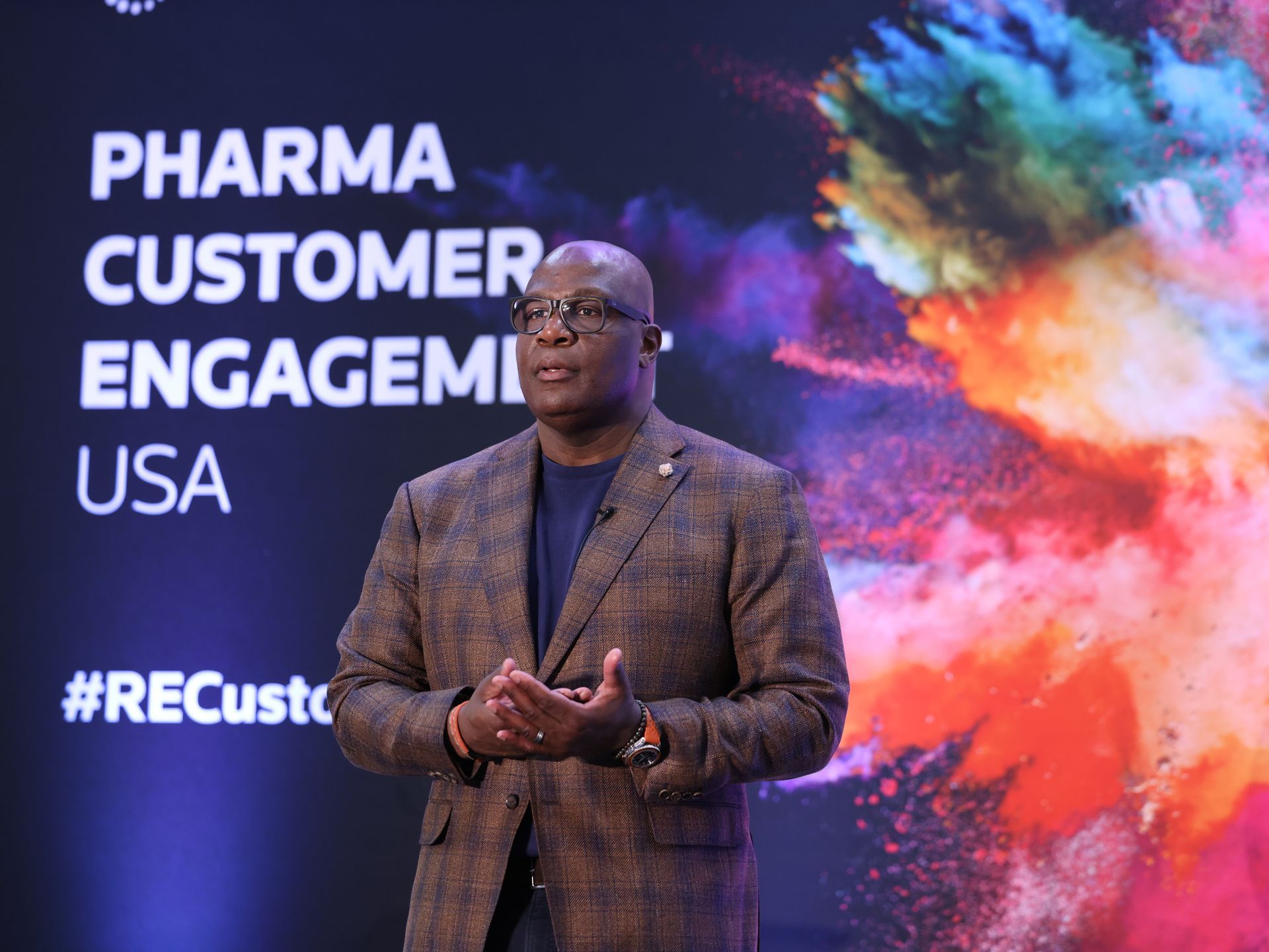
Man speaking at a conference. Text: Pharma Customer Engagement USA. Colorful background.
By Wayne Simmons December 26, 2025
[PRACTICE NOTE] An Outsider’s Perspective, Earned from the Inside REFERENCE: “The Customer Excellence Enterprise: A Playbook for Creating Customers for Life”
A starbucks coffee sign hangs on the side of a building
By Wayne Simmons June 12, 2025
CASE-IN-POINT: Recapturing the Mystique: The Starbucks Customer Excellence Series Part 3  REFERENCE: “The Customer Excellence Enterprise: A Playbook for Creating Customers for Life” Commercial (COM) Bold Move #10: Create a New Brand Identity