
Commercial Systems Architecture for Pharma & Life Sciences.
Welcome
The Customer
Excellence LAB.
A Deep Dive into the Architecture, Economics, and Culture of Customer Excellence.
Turn Your Customer-Centric Ambition Into Durable, Deeply Differentiated Commercial Advantage.
FEATURED SOLUTION PARTNER
AI-Driven Intelligence for Pharma’s Consumer-Grade Future.

The Book: Make customer-centricity tangible, sustainable, and real by implementing structural and systemic changes at the company DNA level.
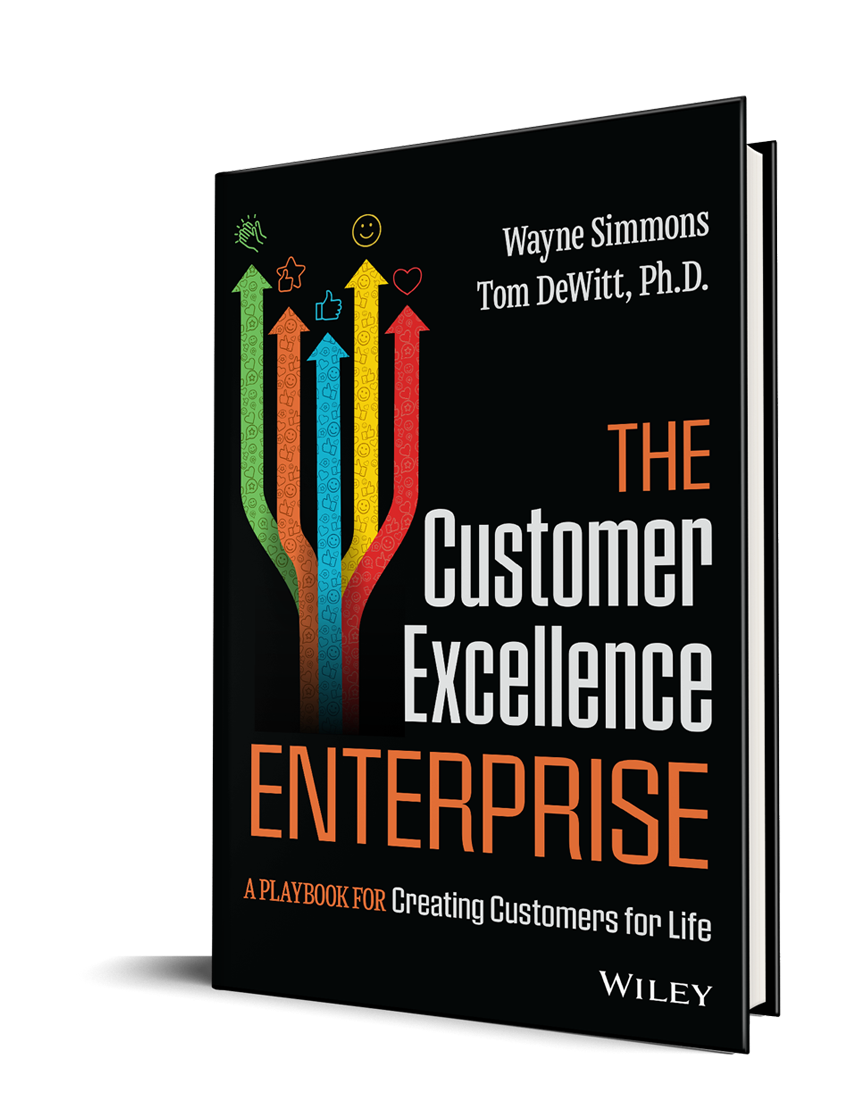
The Customer Excellence Enterprise: A Playbook for Creating Customers for Life is published by John Wiley and Sons.
Customer-centricity has become one of the most overused and underdelivered ideas in modern business. Nearly every organization claims it. Few have built the structures required to make it real. The Customer Excellence Enterprise exists to close that gap.
This book makes customer-centricity tangible, sustainable, and commercially meaningful by showing leaders how to embed it into the DNA of the enterprise. Not as a program. Not as a slogan. But as a system of leadership, culture, and ways of working that consistently turn intent into lived experience.
Customers today expect and rightly deserve exceptional experiences across the entirety of their relationship with a company. Meeting that expectation requires more than better messaging or incremental optimization. It requires structural and systemic change in how organizations define value, make decisions, and deliver on their promises. This is the work the book is designed to enable.
Written for CMOs, modern marketing and commercial leaders, CX professionals, with specific guidance and relevance across the C-Suite, P&L Owners, and Boards of Directors, The Customer Excellence Enterprise reframes customer experience as a core growth engine and strategic asset. It shows how experience becomes a revenue accelerator, a durable source of differentiation, and a driver of long-term enterprise value across the full customer lifecycle. By doing so, it helps organizations move beyond the persistent disconnect between customer-first rhetoric and the reality customers actually encounter.
Grounded in a powerful combination of real-world practice and academic rigor provided by the authors, the book draws on examples from customer experience outliers, admired brands and organizations that consistently help their customers live their best lives and outperform their peers as a result. These are not best practices in isolation, but repeatable patterns of behavior, decision-making, and execution that leaders can adapt to their own context.Readers will gain:
- Practical guidance for building a compelling case for urgency and mobilizing leadership, teams, and functions around a shared customer ambition.
- Clear methods for reconstructing brand identity around emotional connection, trust, and relevance rather than messaging alone.
- Deep insight into the habits, operating principles, and success formulas used by organizations that have turned customer experience into a scalable commercial advantage.
At its core, The Customer Excellence Enterprise is about moving customer experience out of the margins and into the center of how companies operate. It shows how customer excellence becomes inseparable from brand identity, commercial performance, and how organizations ultimately show up in the world. Customer-centric customer and customer experience are no longer nice-to-haves.
This book shows how to make it an enterprise capability, making companies predisposed to consistently delivery exceptional experiences.
In pharma, Customer Excellence is a commercial growth lever, not a CX initiative. HCPs increasingly base prescribing decisions on the combined experience of brand, product, and delivery. Commercial impact now depends on how coherently these elements show up across field, digital, access, and support.
A Case for Change.
Decode the core provocations, patterns, and possibilities reshaping customers, competition, and the future of growth.
What is Customer Excellence?
Customer Excellence is the intentional, disciplined pursuit of differentiation and preference by building an organization that is predisposed to consistently deliver a positive customer experience. It is the enterprise capability to consistently translate intent into lived experience, aligning brand promise, product value, and human interaction into a coherent system of delivery.
At its core, Customer Excellence recognizes a fundamental truth about modern customers. They do not experience companies through campaigns, org charts, or functional silos. They experience them through interactions. Over time, those interactions accumulate into perception, belief, and meaning. Each moment signals respect or indifference, competence or friction, empathy or extraction. Customer Excellence is the structural and systemic capability that governs those signals in advance, ensuring the organization is predisposed to act in ways that are deliberate, aligned, and worthy of trust.
This is not customer experience as a department, a metric, or a program. It is customer-centric culture and experience acumen operating as an enterprise belief system, expressed through behavior. It is the difference between organizations that rely on recovery and those that are predisposed to deliver well by design. It marks a shift from managing impressions to demonstrating reverence in how customers are valued, understood, and treated. What the organization believes becomes visible through what it does consistently, not occasionally.
Customer Excellence ultimately challenges leaders to confront a simple but uncomfortable question. Is the organization structurally predisposed to show up as its best self for customers as they actually live, decide, and compare, or only when effort and attention are applied?
Experiential Commerce (n):
A new era where experience itself has become a unit of value creation (or destruction). Since the mid-2000s, the World Bank has tracked this global shift from tangible to intangible value exchange. Experiential value now represents more than 80% of GDP in developed economies and 65% in emerging economies.
The Customer’s Right to Reverence
The principle that customers deserve to be treated with dignity, respect, empathy, and consideration in every interaction. It recognizes customers as whole humans who invest time, attention, and trust, and establishes the moral and strategic foundation of Customer Excellence.
Brand Promise <> Brand Delivery
Brand Promise is the articulated intent of how a brand commits to create value in the customer’s life. It sets expectations and shapes belief. Brand Delivery is the
lived expression of that promise through experience. It is how customers actually encounter the brand in moments of value, friction, and need, and where credibility is earned or lost.
How does Customer Excellence Create Value?
Customer Excellence is not a soft ideal. It is a hard economic lever. When brand promise, product value, and experience delivery are aligned, acquisition becomes more efficient, retention more resilient, and expansion more organic. Customer Lifetime Value increases not through pressure but through preference. Customer Acquisition Cost stabilizes because advocacy replaces some paid demand. Reacquisition costs decline because trust is not repeatedly broken.
In contrast, incoherence creates hidden tax. Customers churn quietly. Rework increases. Frontline effort compensates for broken systems. Marketing spends more to overcome skepticism. Value leaks everywhere.
Customer Excellence reverses this logic by shifting the center of gravity from acquisition to value preservation and value compounding. Instead of treating retention and expansion as downstream benefits, it treats them as the primary economic objective. It shortens the path to economic break even, reduces dependency on constant acquisition spend, and protects the enterprise from the silent erosion of value caused by disengagement and distrust. In financial terms, it is not just a growth strategy. It is a capital efficiency strategy. The core question changes from How efficiently can we acquire customers to How effectively do we protect, deepen, and grow the value of the customers we already have.
At the heart of this shift is the reduction of Customer Value at Risk. Every point of friction, inconsistency, or misalignment between promise and delivery puts future revenue at risk long before churn shows up in the numbers. Customer Excellence increases Customer Lifetime Value not by extracting more from customers, but by earning the right to stay relevant in their lives.
Superficial customer-centricity, weaponized "intrusion" marketing, and old-school CX won’t move the needle.
Customer Excellence Will.
What do The Ritz-Carlton, Amazon, Chewy, and other "outlier" companies know that you don't? With AI parity, Digital Democratization, and Experiential Commerce, the time is now for Customer Excellence. CMOs, marketers, and CX pros can finally unite to turn customer-centricity and customer experience into deeply differentiating strategic assets, organic to corporate success formulas, and the structural and systemic mechanisms that earn preferential positions in the hearts, minds, and lives of today's discerning customers.
The Art & Science Behind Customer Excellence
Twelve pillars that turn aspiration into sustained advantage
Volume-driven engagement is creating diminishing returns. Reach and frequency optimize activity, not value. Customer Excellence shifts the commercial job-to-be-done from maximizing interactions to reducing burden, effort, and friction across the Path to Prescribe and Path to Fulfill.
What is the Unifying Power of Customer Excellence?
The true power of Customer Excellence lies in its ability to unify what many organizations have allowed to fragment. When activated by CMOs, marketers, commercial, and customer experience leaders, Customer Excellence becomes a structural and systemic force that aligns brand ambition with brand delivery and turns customer centricity into a durable source of advantage.
Customer Excellence is not a theory or an overlay. It is a proven, structural, and systemic approach to hardwiring customer centricity and customer experience into the enterprise success formula itself. This is not about adding another function, framework, or program alongside what already exists. It is about embedding the customer and their lived experience into the core machinery of how organizations operate, make decisions, and create value.
That unifying power shows up across three critical dimensions.
Unifying Brand Promise and Lived Experience
Customer Excellence closes the persistent gap between what brands promise and what customers actually experience. It aligns brand intent with customer reality by ensuring that expectations are not set in isolation from delivery. What the organization says, signals, and aspires to becomes visible and credible through how it shows up across real interactions. This alignment transforms brand from a narrative into a lived truth and replaces aspiration with trust.
Unifying Commercial Functions and Customer Value
Customer Excellence integrates customer value directly into the engines of commercial performance. Marketing, sales, and product or launch excellence are no longer optimized as separate disciplines but orchestrated as a single system predisposed to drive customer and experience led growth. This unification shifts commercial advantage away from short term extraction and toward sustained preference, loyalty, and expansion. Growth becomes a byproduct of coherence rather than pressure.
Unifying Customer Facing Functions into Seamless Journeys
Customer Excellence aligns customer engagement, experience, success, and care into end to end journeys that customers can actually feel. By eliminating silos, structural gaps, and high risk handoffs, it reduces friction and dissonance at the moments that matter most. Customers experience continuity rather than fragmentation, and organizations replace reactive recovery with intentional design.
Together, these points of unification explain why Customer Excellence is so powerful. It does not compete with existing functions. It connects them. It does not sit adjacent to strategy. It operationalizes it. It does not ask organizations to care more about customers. It redesigns the enterprise so caring becomes the natural outcome of how work gets done.
What is a Customer Excellence Enterprise?
A Customer Excellence Enterprise is an organization that has embedded Customer Excellence at the DNA level, making it predisposed, sustainable, and capable of continuous improvement over time. It is not an ideology or a philosophy layered onto existing structures. It is a fundamental re architecture of how the enterprise thinks, decides, and delivers.
In a Customer Excellence Enterprise, brand, product, and experience are amplified by culture and treated as interdependent systems rather than isolated functions. Leadership intent is translated into enterprise conviction and reinforced through operating discipline. Experience is designed upstream, where value is created, rather than corrected downstream, where value is lost.
This enterprise does not ask how to optimize the funnel. It asks how to earn preference across the full relationship lifecycle. It does not view experience as the output of frontline effort alone. It understands experience as the cumulative outcome of leadership choices, everyday behaviors, operating models, incentives, and cultural signals.
The Customer Excellence Enterprise exists because aspiration without architecture fails. Many organizations claim to be customer centric. Few are structurally built to be. This is the difference between intent and impact. This is how Customer Excellence becomes real.
How is Customer Excellence Different from Customer Experience?
Customer experience describes what customers feel. Customer Excellence describes how organizations behave. Experience is an outcome. Excellence is a capability.
Most organizations focus on measuring experience after the fact. They survey, score, and report. These efforts are valuable but insufficient. They describe symptoms, not causes. Customer Excellence shifts the focus upstream to the conditions that create experience in the first place.
This includes how work is prioritized, how decisions are made, how tradeoffs are resolved, and how success is defined. It includes the clarity of the brand promise, the usability of systems, the orchestration of journeys, and the enablement of frontline teams.
Customer Excellence does not replace customer experience. It makes it reliable.
Access and patient support become integral to commercial performance. Customer Excellence recognizes that prescribing success depends on downstream experiences. Access friction, reimbursement delays, and support complexity are treated as commercial constraints, not operational afterthoughts.
How does Customer Excellence Redefine the Value Proposition?
Value differentiation has traditionally been framed around product superiority and brand signaling. Products were expected to perform. Brands were expected to persuade. Experience was treated as an afterthought. That hierarchy no longer holds.
In today’s markets, product advantages are quickly copied and brand messages are increasingly lost in the noise. What customers actually remember, compare, and talk about is how it feels to do business with you. Customer Excellence elevates experience from a supporting role to a unit of value in its own right. It becomes a source of differentiation, preference, and willingness to stay.
This fundamentally changes the value proposition. The offer is no longer just what you sell or what you say you. It is how reliably and coherently you help customers achieve their goals across moments, channels, and contexts. Experience becomes the connective tissue between brand promise and product utility. When it is designed intentionally, it turns abstract brand values into lived proof.
This shift is especially critical in Experiential Commerce, where value is created not at the point of transaction, but across the full arc of engagement. Customers are not just buying outcomes. They are buying confidence, ease, and continuity. They are comparing your experience not to your direct competitors, but to the best experiences they have anywhere. In that environment, experience is not a nice to have. It is the arena of competition.
Customer Excellence ensures that experience is not left to chance or individual heroics. It systematizes how the brand shows up, how the product is activated, and how the relationship evolves over time. The result is a value proposition that is harder to copy, more emotionally resonant, and more durable. It is how brands move from being chosen to being preferred, and from being preferred to being trusted. In the end, Customer Excellence is not an add on to product and brand. It is the force that makes them matter.
Customer Excellence as
Economic Advantage
Customer Excellence exists because inconsistency is expensive. Every break between promise and delivery increases Customer Value at Risk, inflates acquisition and reacquisition costs, and erodes lifetime value even when topline performance appears healthy. Customer Excellence addresses this by creating continuity across interactions, channels, and time.
The Customer Becomes the Primary Design Constraint
Customer Excellence exists when the customer is not treated as an input to planning, but as the governing constraint that shapes decisions across the enterprise. This means choices about structure, process, incentives, technology, and prioritization are evaluated first through their impact on customer outcomes, not internal convenience or functional efficiency.
Customer Insight Translated into Organizational Action
Many organizations collect vast amounts of customer data but struggle to translate insight into meaningful change. Customer Excellence closes this gap by embedding customer learning directly into governance, planning cycles, and operating rhythms. Customer Excellence ensures that listening leads to learning and learning leads to continuous improvement.
Experience variability is a leading indicator of commercial risk. Inconsistent field, digital, and access experiences erode trust before revenue loss appears. Customer Excellence treats experience variability as a quality failure that signals Customer Value at Risk.
The Essential Evolution from Funnel to Flywheel Commercial Model.
The Customer Excellence Commercial Model is Powered by the Flywheel.
Commercial growth has evolved from funnel logic that prioritized acquisition and conversion, to bowtie thinking that acknowledged retention but still treated experience as secondary. The flywheel represents the necessary shift, reframing growth around continuity, trust, and compounding value. In a flywheel model, experience becomes the engine of momentum, friction is actively removed, preference is earned over time, and commercial value compounds rather than leaking away.
Customer Excellence Is Now a Leadership Imperative
The urgency for Customer Excellence does not come from rising expectations or shifting sentiment. It comes from a structural mismatch between how modern customers operate and how enterprises are designed.
Modern Consumers are
"Hyper-Empowered"
Customers today are more informed, more connected, and more capable of switching than at any point in history. Information symmetry, choice density, and reduced switching friction have structurally shifted power.
Consumer-Grade Pharma is a
Forcing Function for Change
HCPs and patients do not maintain separate expectation sets. The experiences that shape their standards elsewhere inform how they evaluate pharma engagement. Scientific differentiation no longer compensates for experiential friction.
How does Customer Excellence Impact Marketers?
Moving Marketing Beyond the Funnel.
The Customer Excellence Enterprise is the single book on customer-centricity and customer experience that every CMO and Modern Marketer needs to read. As the definitive playbook guiding companies on how to help customers live their best lives, a central theme is to move marketing beyond the funnel to make customer-centricity tangible, sustainable, and real and customer experience an equal partner to product and brand in a new elevated value exchange with today’s discerning customers.
Future-Proofing Marketing Careers.
In markets that are noisier and more crowded than ever, and AI and automation are poised to supplant digital and omnichannel marketing skills, the future of marketing must be more customer-centric. The Customer Excellence Enterprise empowers CMOs and Modern Marketers to renew their value proposition to their companies, counteract the “AI Replacement Narrative” and future-proof their career paths.
Guiding Structural and Systemic Change.
Outlining the leadership, organizational, operational, and commercial facets essential for sustained success, The Customer Excellence Enterprise is a comprehensive playbook for any company seeking to differentiate deeply from competitors and win preferred positions in the hearts and minds of today’s discerning customers. With insights into how companies can become structurally and systemically predisposed to deliver exceptional experiences.
Brand strategy becomes a delivery mandate, not a messaging exercise. In a Customer Excellence model, pharma brand teams must define not only what the brand stands for scientifically, but how it should behave across field interactions, digital follow-up, access processes, and patient support. Brand stewardship expands from message approval to experience delivery.
Why Do Most Customer Centric Transformations Stall?
Most transformations stall because they confuse intent with conviction and tools with systems.
Organizations announce customer centricity, launch programs, appoint roles, and deploy platforms. Yet the underlying operating logic remains unchanged. Functional silos persist. Metrics conflict. Incentives reward short-term outputs over long-term relationships. Leaders talk about customers but decide for efficiency, control, or internal convenience.
The result is a symbolic change without structural reinforcement. The Customer Excellence Enterprise confronts this directly. It recognizes that customer centricity fails when it is treated as an overlay rather than a redesign. Excellence requires tradeoffs. It requires leaders to choose coherence over complexity and delivery over declaration.
Transformation does not fail because people do not care. It fails because the enterprise is not rewired to act on what it claims to value.
How Does the Pursuit of Excellence Change the Game?
Customer Excellence is no longer optional because customers no longer tolerate incoherence. Markets reward those who reduce friction, honor trust, and deliver consistently. Those who do not are compared, exposed, and replaced.
The next era of competitive advantage will not belong to the most technologically advanced organizations alone. It will belong to those that combine capability with care, scale with humanity, and ambition with accountability.
The Customer Excellence Enterprise is the blueprint for that future.
ustomer Excellence closes the persistent gap between what brands promise and what customers actually experience. It aligns brand intent with customer reality by ensuring that expectations are not set in isolation from delivery. What the organization says, signals, and aspires to becomes visible and credible through how it shows up across real interactions. This alignment transforms brand from a narrative into a lived truth and replaces aspiration with trust.
Why Start with the Whole Human Customer Context?
Customer Excellence starts with a more honest view of the customer. Customers are not roles, segments, or channels. They are whole humans navigating fragmented lives.
They experience friction before and after transactions. They carry emotional context into decisions. They compare every interaction to the best ones they have had, not the category average. They value effort reduction as much as delight and dignity as much as personalization.
Designing for the whole human customer means understanding context, not just behavior. It means acknowledging that time, energy, trust, and cognitive load are currencies. It means recognizing that people work hard for their money and their time and that organizations have an obligation to honor both.
The Customer Excellence Enterprise treats this obligation as a design principle, not a slogan.
What is Required of Leaders?
Customer Excellence is a leadership discipline and mindset before it is an operational or commercial one.
Leaders must move beyond asking whether the organization cares about customers and ask whether it is designed to serve them well. They must be willing to challenge inherited models, functional orthodoxy, and performance myths. They must align words, decisions, and consequences.
This requires conviction. Conviction turns belief into action and action into system change. Without it, Customer Excellence remains an aspiration. With it, it becomes a defining capability.
The Customer Excellence Enterprise is ultimately a leadership choice. It is the choice to build an organization worthy of the customers it seeks to serve.
Customer Excellence aligns customer engagement, experience, success, and care into end to end journeys that customers can actually feel. By eliminating silos, structural gaps, and high risk handoffs, it reduces friction and dissonance at the moments that matter most. Customers experience continuity rather than fragmentation, and organizations replace reactive recovery with intentional design.
Field effectiveness is redefined around barrier removal, not call execution. Customer Excellence changes what it means for the field force to perform well. Success is no longer defined primarily by reach, frequency, or message delivery quality. It is defined by how effectively customer-facing colleagues identify, escalate, and help resolve barriers that prevent prescriptions from converting into patient starts.
Lesson Reflection:
Key Questions for Leaders.
1. Do we lead with customer reality or company convenience?
When decisions are made, whose truth prevails—the customer’s lived experience or our internal assumptions and constraints?
2. Is customer experience a system, not a slogan?
Have we operationalized customer-centricity through structure, governance, and measurement—or does it live mainly in messaging and intent?
3. Can every leader connect their work to customer outcomes?
Do executives and teams clearly see how their actions affect trust, effort, satisfaction, and long-term value?
4. Do our brand promises match our delivery systems?
Is there consistency between what we say in marketing and what customers actually feel across channels, journeys, and touchpoints?
5. Are employees empowered to act in service of the customer?Do our people have the clarity, tools, and permission to remove friction and deliver meaningful moments of care and value?
6. Do we measure what matters most to the customer?Are our KPIs centered on what customers experience—not just what the organization produces or sells?
7. Is feedback built into how we operate, not just how we listen?Do we have systems that continuously capture, interpret, and act on customer and frontline insight at scale?
8. Are we improving faster than customer expectations are evolving?Does our pace of learning and change keep up with the accelerating expectations set by leading brands and everyday experiences?
Get Started Today.
Get the Playbook.