Part 5/6: Reconstruct the Starbucks Brand Pyramid: The Starbucks Customer Excellence Series

CASE-IN-POINT: Recapturing the Mystique: The Starbucks Customer Excellence Series Part 3


REFERENCE: “The Customer Excellence Enterprise: A Playbook for Creating Customers for Life” Commercial (COM) Bold Move #10: Create a New Brand Identity


Part 5/6: Reconstruct the Brand Pyramid

Every company has a brand pyramid, whether explicitly documented in a formal framework or implied through its actions, messaging, and customer interactions. Even without formal articulation, a company's values, promises, and positioning are communicated to customers through its marketing, advertising, and behavior, creating a de facto brand pyramid that shapes how it is perceived. 


Defined as a strategic framework used to codify how a company wants to be viewed and perceived by its target audiences and stakeholders, most often through marketing, advertising, and brand storytelling. The hierarchy of a brand pyramid typically progresses from foundational elements like functional attributes and product benefits at the base, to brand personality, brand values, and the ultimate brand promise at the top. Serving as a guiding framework, the pyramid is ultimately helpful in setting a shared aspirational identity of how a brand wants to show up in the world.


However, traditional brand pyramids rarely address the experiential attributes that define how the company will interact with customers and what they can expect in those real-world interactions. Particularly meaningful in today’s omnichannel environment, this omission often leads to a dissonance between the brand promise—what the company says it stands for—and the customer’s actual experience. When customers encounter inconsistent or subpar interactions, the gap between expectation and reality can erode trust and undermine the brand’s credibility.


Did Starbucks forget something?

In the context of the brand pyramid, Starbucks’ new focus on the convenience of scale and speed, driven primarily by its wildly successful, super-convenient mobile app, has created a coffee factory reality that (likely unintentionally) may be competing (or potentially conflicting) with the coffeehouse perception that it originally intended. Moreover, this strategic shift seems to have occurred without Starbucks letting customers and the world know that it was going to happen! Did the company simply forget? or did it not fully appreciate the implications of this sea change? This state of affairs runs the risk of sowing confusion and diluting the hard-earned brand equity that the company has generated from the community and comfort-oriented "third place" origin experience that once set the company apart.


To realign and renew its brand proposition and address the potential dissonance between its perception and reality of its brand, Starbucks has the opportunity to reconstruct its brand pyramid to explicitly 1) harmonize its dueling coffeehouse and coffee factory propositions; 2)  codify the “ideal” Starbucks Experience in non-negotiable principles, attributes, and promises; and 3) articulate its standards for service delivery. Through this realignment, Starbucks can deliver a clear and reimagined brand narrative that resonates internally and externally:


The foundation layer of the brand pyramid involves establishing explicit service standards that support the brand vision. These standards should outline the behavior and expectations for every touchpoint, whether it’s ensuring accurate, friendly service during a mobile order hand-off or creating a warm, welcoming environment for in-store guests. Functional and cultural training programs must emphasize the importance of balancing community and comfort with the convenience of scale and speed, empowering baristas to deliver meaningful interactions even under time constraints. With this foundation, Starbucks can elevate its service consistency, equip employees for success, and build stronger emotional connections with its customers.


At the heart of this reconstructed brand pyramid lies a clear articulation of the "ideal" Starbucks customer experience across all modalities, from mobile orders to in-store visits. This central layer defines the ideal experiential outcomes Starbucks aims to deliver at every interaction. For example, mobile order pick-ups should not only be efficient but also retain the brand’s "human touch", with baristas offering personalized greetings or gestures, even in fast-moving environments. In-store, the experience should reemphasize comfort and foster a sense of community through inviting spaces and consistent quality. With an emphasis on prioritizing its core community, comfort, and convenience experiential factors within an ideal experience, Starbucks can ensure that all customers, regardless of their preferred interaction mode, feel valued and connected to the brand.


At the top of the pyramid are the more traditional defining and differentiating elements that set Starbucks apart from competitors. To retain its unique identity, Starbucks must double down on its original "third place" promise while innovating for modern convenience. In practice, this could involve reimagining store layouts to create hybrid spaces that accommodate both pick-up efficiency and comfort-focused seating areas. These capstone elements help differentiate Starbucks interactions and become an organic element of the overall brand narrative, optimized to deliver not just coffee, but meaningful experiences that resonate emotionally.


Being intentional about reconstructing its brand pyramid, fortifying it with clear service standards, ideal experience attributes, and brand-defining principles, positions Starbucks to resolve the conflict between its convenience-driven innovations and its comfort-oriented legacy. This redefinition offers a cohesive identity that resonates with both new and legacy customers, aligning the company’s operations with customer expectations and organizational capabilities internally and guiding the company’s messaging and advertising internally with brand promises externally. Marketing campaigns can highlight how Starbucks seamlessly integrates convenience with its comforting heritage, reinforcing its commitment to both speed and soul. Internally, these principles should shape employee training and operational processes, ensuring that every team member understands and embodies the renewed brand promise. This alignment will strengthen trust, loyalty, and emotional connection, ensuring Starbucks remains a beacon of community, comfort, and convenience in an evolving marketplace.


Read the other parts of The Starbucks Customer Excellence Series:

Part 1:  From A Customer: An Open Letter to Starbucks

Part 2:  Societal Savior or Customer Experience Death Star

Part 3:  Recapturing the Starbucks Mystique

Part 4:  Redefine the Starbucks Culture Platform

Part 5:  Reconstruct the Starbucks Brand Pyramid

Part 6:  Redesign the Experience Delivery System


To learn more, order “The Customer Excellence Enterprise: A Playbook for Creating Customers for Life” at all major booksellers.

By Wayne Simmons March 15, 2026
Why Customer Excellence is emerging as the discipline that turns scientific innovation into real-world impact. Pharmaceutical science has never been stronger. Pipelines are more diverse, clinical development more precise, and manufacturing more advanced than at any point in history. Yet amid this extraordinary progress the industry faces a defining paradox. Scientific excellence has accelerated dramatically, while the experiences through which that science reaches physicians and patients have not kept pace. The next chapter of commercial excellence will not be won by companies that merely communicate their science more efficiently. It will belong to organizations that deliver it more meaningfully. The companies that lead the next era of healthcare will treat customer experience with the same rigor as clinical efficacy, ensuring that every engagement becomes living proof of their science, their purpose, and their credibility. For decades the pharmaceutical industry has set the evidentiary standard for science and the trust standard for its brands. What now emerges as the next frontier is an experiential standard capable of matching both. Only when the experience of engaging with a company reflects the same precision, credibility, and consistency that govern its science will the full value of innovation reach the people it is intended to serve. This evolution begins with Customer Excellence , the discipline that unites marketing, sales, and launch excellence into a coherent commercial operating system capable of earning both permission and preference. From Science as Foundation to Experience as Fulfillment Science remains the foundation and heartbeat of the pharmaceutical enterprise. It drives the Path-to-Prescribe, where evidence, education, and clinical outcomes shape physician confidence and influence treatment decisions. Yet even the most extraordinary science cannot fulfill its promise unless it moves successfully through the broader system that surrounds the prescribing moment. Once a therapy is recommended, the journey continues through the Path-to-Fulfill , where access, affordability, operational coordination, and patient readiness determine whether a prescription ultimately becomes therapy in the patient’s hands. Across this journey, friction, administrative burden, and fragmented processes frequently erode impact and delay treatment initiation. Sustained outcomes then depend on the Path-to-Adhere , where patient support, education, monitoring, and continuity of care determine whether individuals remain on therapy long enough to realize its intended clinical benefit. The therapeutic value created in the laboratory is only fully realized when patients are able to begin treatment and stay on it with confidence. Clinical innovation can demonstrate efficacy, but experience determines whether that efficacy becomes reality. The journey from lab to life depends on what occurs before, during, and long after the moment of prescription. Before prescribing, healthcare professionals form impressions of credibility, clarity, and relevance. At the point of decision, trust and confidence influence uptake. Afterward, access, patient readiness, and ongoing support sustain adherence and belief in the therapy. In some therapeutic areas, as many as half of prescriptions go unfulfilled or therapies discontinued prematurely. This is rarely a failure of science. It is more often a failure of system design, where burden-heavy and friction-heavy journeys make it difficult for healthcare professionals to initiate and sustain therapy for their patients. Pharma has long set the benchmark for scientific evidence and brand trust. What is now required is an experiential standard equal to those same heights, ensuring that engagement with the company feels as credible, coherent, and confidence-inspiring as the science itself. Science drives the Path to Prescribe. Experience shapes the Path to Fulfill. Sustained engagement enables the Path to Adhere. Together, these journeys define the new frontier of Customer Excellence. Why Transformation Is No Longer Enough Transformation has become the default response to nearly every commercial challenge. Digital transformation, omnichannel transformation, and now AI transformation have each promised to close the gap between companies and their customers. Yet despite billions invested across platforms, data systems, and engagement technologies, the experiences delivered to healthcare professionals often remain inconsistent, impersonal, and disconnected. The issue is not intent but orientation. Transformation modernizes tools, yet rarely challenges the mental models that define success. Organizations become more efficient at executing familiar patterns rather than reimagining how value should be delivered.Pharma does not require another transformation initiative. What it requires is a disciplined reinvention that questions the orthodoxy of activity metrics, channel proliferation, and functional isolation while restoring coherence and humanity to how the industry delivers its science to the world. Customer Excellence as a Rebellion Customer Excellence represents that shift. It is a disciplined and systemic redefinition of how value is created, delivered, and sustained. Rather than measuring progress through scale and speed alone, it positions coherence, trust, and ease as the true measures of commercial excellence. This shift is not a rebellion against compliance but against complacency. It challenges leaders to move beyond optimization toward orchestration, building organizations where the quality of engagement reflects the quality of the science itself. The Seven Shifts Defining the Discipline The seven shifts form the architecture of Customer Excellence, uniting marketing, sales, and launch excellence into a single human-centered model for sustainable growth. Shift 1. From Tangible to Intangible Value Exchange Customers increasingly evaluate companies through intangible dimensions such as trust, relevance, and ease. Experiential Commerce has elevated these factors from soft considerations to structural drivers of enterprise value. Shift 2. From Campaign-Centric to Customer-Centric Journeys Marketing can no longer rely on episodic campaigns alone. Value is created across continuous journeys where engagement extends far beyond the initial promotional moment. Shift 3. Experience as a Third Pillar of Value Product and brand may attract attention, but experience determines whether relationships endure. Organizations that integrate experience alongside product and brand create a far more resilient value proposition. Shift 4. From Transactions to Relationships Customer health must be measured over time. Longitudinal relationships built on trust ultimately drive sustainable commercial performance. Shift 5. From Funnel to Flywheel Growth no longer ends at conversion. Customer Excellence transforms disconnected interactions into a compounding cycle of engagement, trust, and expansion. Shift 6. From Neutral Interactions to Brand-Defining Moments Every interaction communicates brand character. Thoughtfully designed experiences become evidence of reliability and partnership. Shift 7. From Vertical Silos to Horizontal Journeys Customers experience companies horizontally across journeys, not vertically through internal functions. Customer Excellence realigns organizations to reflect this reality. From Rebellion to System The seven shifts describe how pharmaceutical organizations can close the gap between scientific mastery and the lived experiences that bring that science to life across the full continuum of care. Customer Excellence does not replace Marketing Excellence, Sales Excellence, or Launch Excellence . It integrates them. Together these disciplines form a unified, customer-aligned commercial operating system capable of translating scientific promise into real-world clinical and commercial impact. Within this system, marketing shapes the scientific narrative that informs the Path to Prescribe. Sales brings that narrative to life through trusted engagement with healthcare professionals. Launch orchestrates the critical moments that accelerate adoption. Customer Excellence ensures that the experience surrounding the therapy enables succes s across the Path to Fulfill and the Path to Adhere, where access, support, and sustained engagement determine whether therapeutic value is ultimately realized. This is the next chapter of commercial excellence in pharma. It moves the industry beyond transformation toward orchestration, beyond scale toward coherence, and beyond message toward meaning. Science drives the Path to Prescribe. Experience shapes the Path to Fulfill. Sustained engagement enables the Path to Adhere. Customer Excellence unites all three. Science earns permission. Experience sustains belief. Customer Excellence earns both. Key Takeaways The future of differentiation in healthcare is experiential. Scientific innovation remains essential, but the experiences surrounding therapies increasingly determine whether that innovation achieves its intended impact. Customer Excellence represents the structural response to this shift. By integrating marketing, sales, launch excellence, and service functions into a coherent operating system, organizations can translate scientific value into lived value. Trust is no longer assumed simply because a therapy demonstrates clinical efficacy. It is built through the design, coherence, and consistency of the experiences that surround prescribing, access, and patient support. Transformation initiatives may modernize tools, yet genuine change occurs when organizations replace compliance-driven thinking with a deeper conviction about the centrality of the customer. Science earns permission through evidence, while experience earns preference through delivery. Together they form the foundation of enduring growth in the era of Experiential Commerce. Diagnostic Questions to Consider As the commercial model evolves, leadership teams must confront several difficult questions. Are we still benchmarking our engagement against other pharma companies, or against the best experiences healthcare professionals encounter in their everyday lives? Where does friction persist across the real journeys of prescribing, access, and patient adherence, and how clearly do we understand the barriers preventing clinical intent from translating into treatment? Do our commercial systems reinforce the promise of our science and brand, or do they introduce complexity that quietly undermines them? Have our investments in digital platforms, omnichannel engagement, and artificial intelligence reduced the cognitive burden on healthcare professionals, or simply multiplied the number of touchpoints they must navigate? A re we organized around internal functions and campaigns, or around the journeys through which physicians and patients actually experience our therapies? Most importantly, are we building organizations that only aspire to be customer-centric , or enterprises that are structurally designed to deliver customer excellence? Closing Reflection The pharma and life sciences industry has mastered the science of discovery and the discipline of evidence. The next era of leadership will belong to companies that apply that same rigor to the experiences through which science reaches the world. When organizations align their commercial systems with the realities of modern customer expectations, innovation no longer struggles in the final mile between prescription and patient care. Instead it arrives with clarity, coherence, and confidence. Your breakthrough science deserves experiences worthy of it. Together, we turn customer excellence into real-world impact. About the Author Wayne Simmons is a customer excellence strategist and founder of The Customer Excellence Agency, where he partners with pharmaceutical and life sciences leaders to turn customer-centric ambition into durable commercial advantage. He previously served as Global Customer Excellence Lead within Pfizer’s Chief Marketing Organization and has held leadership roles with Bayer Pharmaceuticals and The Ritz-Carlton Leadership Center. Wayne writes The Customer-Centric Marketer newsletter and is the author of The Customer Excellence Enterprise: A Playbook for Creating Customers for Life. The Customer Excellence Agency: Advancing the Pursuit of Excellence in Service of Science.
Pharma commercial engines have reached unprecedented sophistication in generating prescribing intent
By Wayne Simmons February 23, 2026
Pharma commercial engines have reached unprecedented sophistication in generating prescribing intent, yet a persistent structural gap remains between conviction and realized patient and commercial impact. The issue is not selling effectiveness.
January 9, 2026
The Founding Philosophy of The Customer Excellence Agency Founded on the conviction that scientific brilliance only becomes human impact when excellence is engineered into leadership, culture, and experience delivery. This is a philosophy of rigor, responsibility, and reverence for the people science exists to serve.
December 29, 2025
[FAQs] The Customer Excellence Agency REFERENCE: Clear answers to the most common questions about Customer Excellence Activation, why it matters now, and how it works in practice.
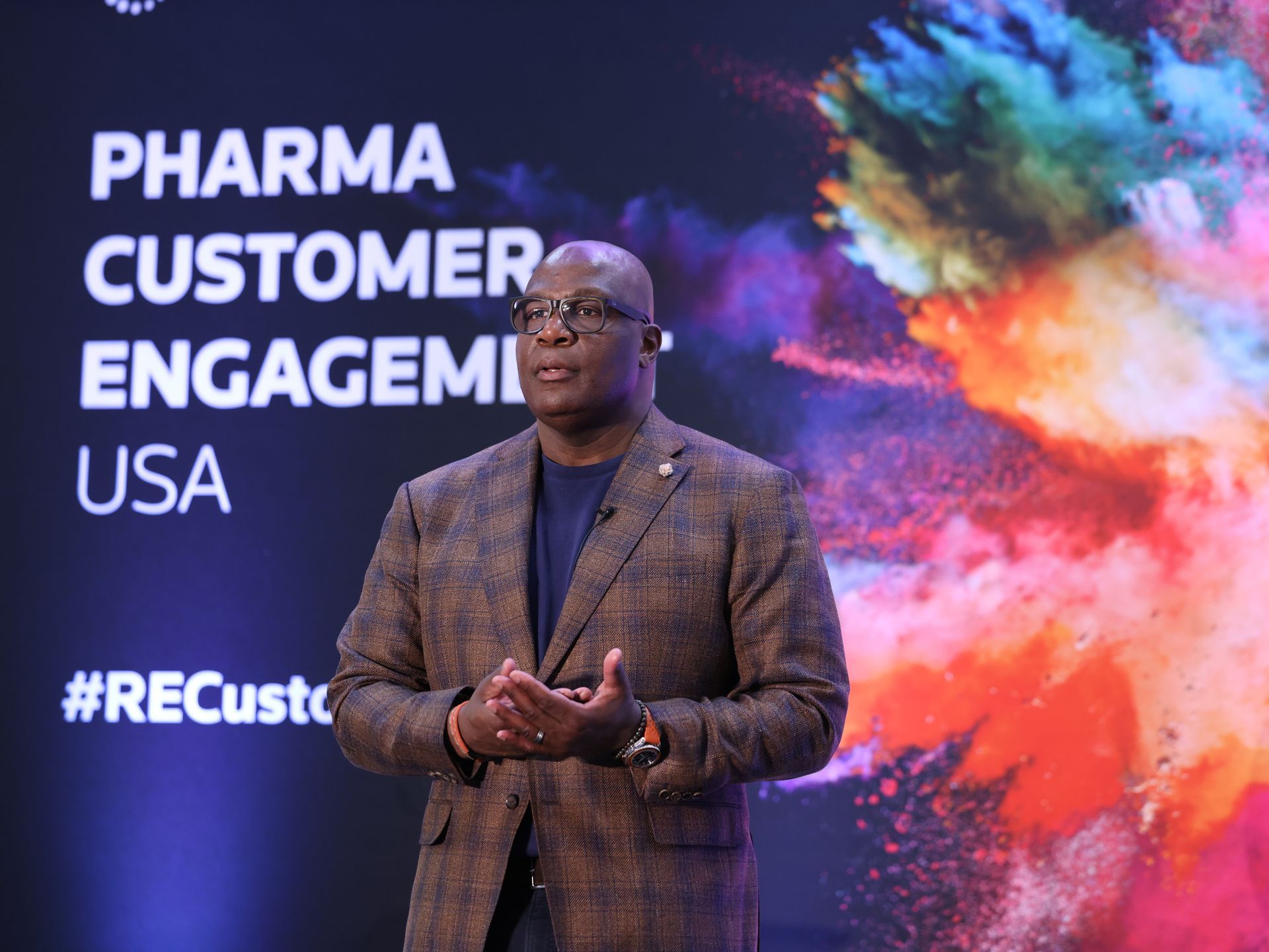
Man speaking at a conference. Text: Pharma Customer Engagement USA. Colorful background.
By Wayne Simmons December 26, 2025
[PRACTICE NOTE] An Outsider’s Perspective, Earned from the Inside REFERENCE: “The Customer Excellence Enterprise: A Playbook for Creating Customers for Life”
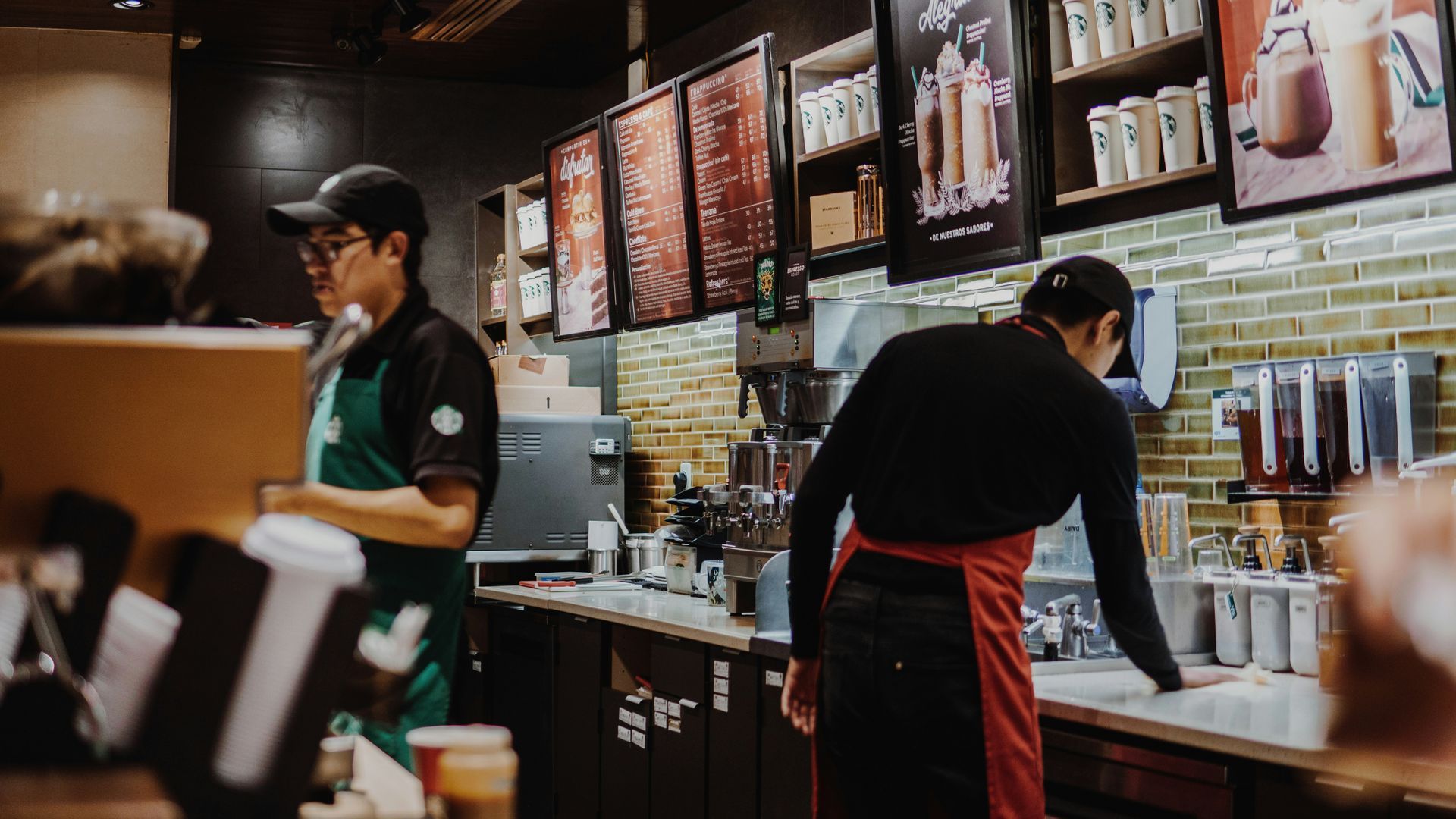
Two men are working in a starbucks coffee shop.
By Wayne Simmons June 12, 2025
As often as it is mentioned in business literature, the idea of corporate culture can still seem intangible, amorphous, and even mysterious. Customer Excellence Enterprises have mastered the craft of clearly defining, documenting, and embedding their distinctive cultures at the DNA level through well-crafted culture platforms: * A culture “platform” is the foundation of its identity, embodying the shared values, principles, and practices that guide how it operates and interacts with the world. * Like the DNA of a living organism or the operating system of a computing device, culture platforms define the unique traits and essence of an organization, making it distinct from others. * To remain relevant and effective, a Starbucks culture platform must evolve to bridge the gap between the present and future while preserving authenticity, and timelessness.